The short version
A useful starting point
Consider Sonix for finding and verifying passages in a recorded source collection.
A good fit if…
Editors and researchers working with permitted interviews or recordings.
Look elsewhere if…
You need an unreviewed transcript to serve as a verbatim authoritative record.
A set of interviews becomes more useful when you can locate a relevant passage quickly. Sonix is a candidate for transcription and retrieval across recorded material. Use the transcript as an index to evidence, while retaining the recording and the context needed to verify quotations and interpretations.
The documented retrieval capabilities
Sonix describes timestamped transcription and search or questions across uploaded material. That can help an editor investigate a defined subject. It does not establish a particular accuracy level for your speakers, recording quality or terminology, so evaluate the material you actually expect to process.
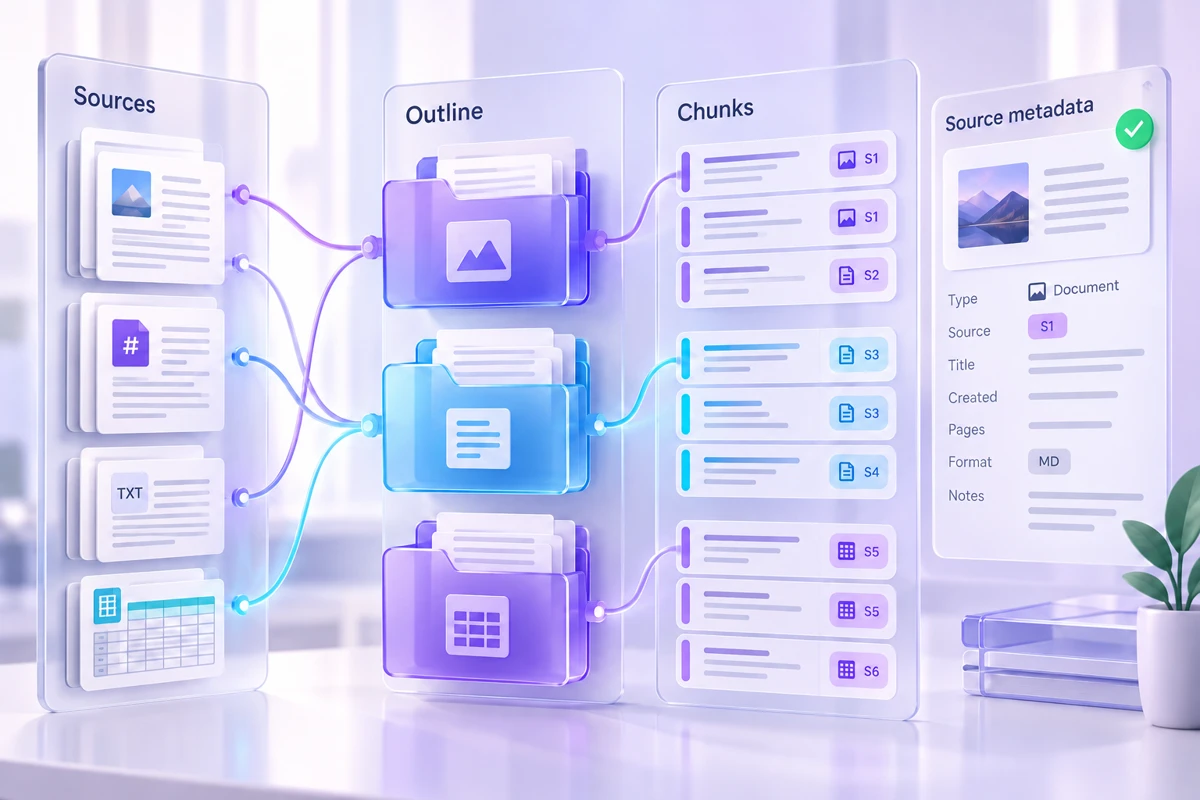
Prepare a source register
For a hypothetical customer-research project, give each permitted interview a stable identifier, date and short description. Keep the original file and note which participants may be quoted or shared. Avoid putting unnecessary personal details into filenames or labels merely to make the collection easier to search.
When a search or generated answer points to a useful passage, listen to the surrounding exchange. A sentence can refer to a different product version or repeat an idea the speaker later rejects. Record the timestamp and relevant qualification with the research note, rather than copying a detached line into a presentation.
Use an explicit correction policy
Check names, specialized terms, quantities and speaker attribution before relying on them. Preserve uncertainty when the audio is ambiguous. If you correct a transcript, distinguish a transcription correction from an editorial rewrite of the speaker’s words. The latter can be suitable for a summary but should not silently replace a quotation.
Test a retrieval task with known answers
Use a permitted sample containing a factual detail, an ambiguous phrase and a later correction. Ask a reviewer to find the passages and produce a short evidence note. Compare that note with the original recording. Review access and retention controls for the collection. Choose Sonix when it reduces the work of finding and checking evidence, while leaving an auditable route back to the source.
Compare the workflow with the other options in our task-based comparison.
Review scope
This review uses the linked official product documentation and editorial analysis. We have not run a hands-on product test or measured accuracy. Suggested exercises describe how to evaluate your own workflow. Plan access and data settings should be confirmed for the account you intend to use. Sources checked on 2026-10-24.
Strengths
- Timestamps and retrieval can help connect a note with its source passage.
Limitations
- Search results and summaries can omit surrounding qualifications.